
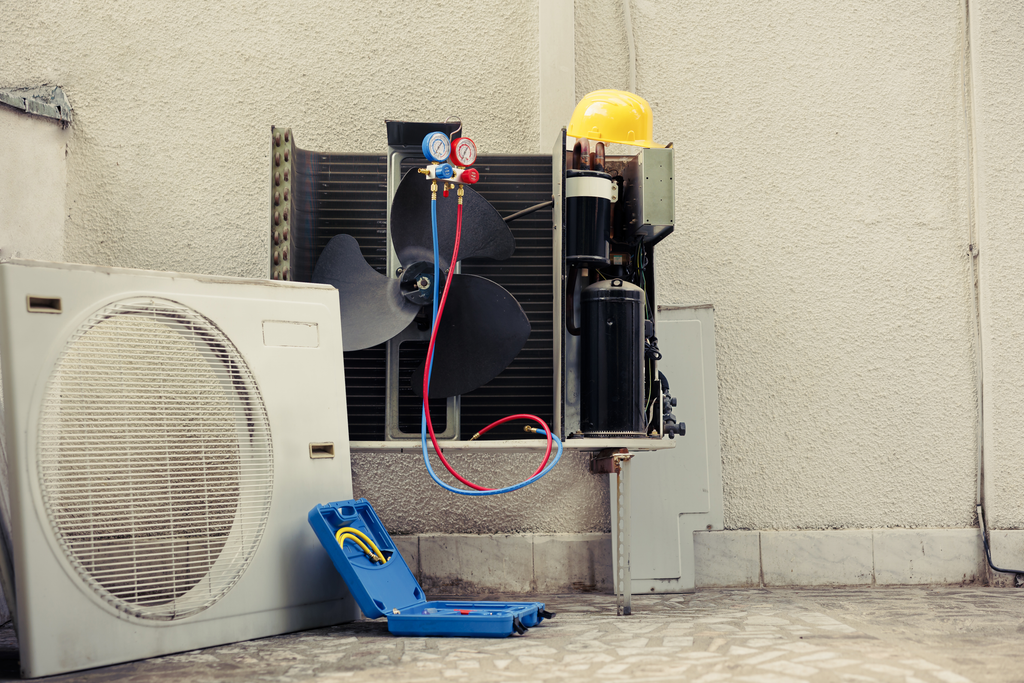
If you’re noticing that your San Antonio home isn’t staying cool like it used to, a refrigerant leak could be the culprit. Proper refrigerant leak detection can catch the problem before it gets worse.
What’s the Refrigerant Do?
Refrigerant is what absorbs heat from the indoors and then releases it outside through a closed loop of coils and lines. When refrigerant levels drop because of a leak, your AC starts working harder, but it actually delivers less cooling power. You get the worst of all worlds: warm air coming from the vents, higher bills because the system is running longer, and potential damage to expensive components like the compressor.
Refrigerant Leak Detection
Our technicians use several tools to find leaks, which can be tricky to locate. First, there’s electronic detectors. These can actually find refrigerant molecules in the air. We sweep probes along the lines, coils, and connections to see if there’s any refrigerant gas out there, and these devices can pick up even small leaks that could otherwise be missed.
We’ll also do a visual inspection for any oily residue around fittings or on the floor near the indoor unit. Refrigerant often leaves greasy stains. We’ll also listen for a hissing or bubbling noise, which is usually caused by escaping gas under pressure. We can also pressure test with nitrogen or use ultrasonic tools in some cases or even add a UV dye that glows under blacklight if we need to reveal an exact, tricky spot.
Why Leaks Happen
Think about your copper lines and coils. They have to deal with constant heat, humidity, and the occasional storm, and these all take a toll. And over the course of years, the tiny vibrations from the unit running start to loosen some of the connections. Formic acid corrosion gradually eats pinholes in the tubing, and poor installation or physical damage can also be a problem. Refrigerant doesn’t get “used up” by normal operation, so if it’s low, that means it has escaped somewhere.
Preventing Leaks
Good maintenance is the most important way to stop leaks. Schedule annual or semi-annual service so our technicians can clean the coils, check all the connections, and measure pressure levels. All that will allow us to spot if there are weak spots before the refrigerant escapes. And if we’re there to always keep proper insulation on the lines, that’ll greatly reduce condensation-related corrosion.
Finding a leak early on will also keep your expenses down because a small leak repair costs a lot less to fix than a full compressor replacement or a revamp of the entire system. Plus, higher bills from inefficiency will add up fast in summer. Maintenance plans spread the costs out and keep them manageable, predictable, and as small as possible.
If you spot any signs that your refrigerant is leaking, reach out to us here at Beluga Air today. We’re San Antonio’s trusted HVAC products and service company. Our techs are licensed, fully insured, background-checked, and go through weekly training to stay on top of the game.
Connect with us


- September 2026
- August 2026
- July 2026
- June 2026
- May 2026
- April 2026
- March 2026
- January 2026
- December 2025
- November 2025
- October 2025
- September 2025
- August 2025
- July 2025
- January 2025
- June 2024
- April 2024
- March 2024
- February 2024
- January 2024
- December 2023
- November 2023
- October 2023
- September 2023
- August 2023
- July 2023
- June 2023
- May 2023
- April 2023
- March 2023
- February 2023
Archives


Learn More
License: #TACL087165E
Location
240 Sherwood Drive
San Antonio, TX 78201